
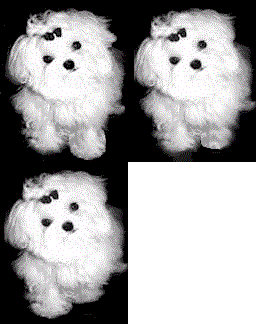
Crate training is one of the most effective tools you can use while raising a Poodle puppy. It’s not just about housebreaking—crates help foster a sense of safety, reduce anxiety, and prevent destructive behavior, all while helping your pup develop structure and independence. At Puppy Petite, we emphasize the importance of early crate training as part of a well-rounded approach to raising healthy, happy puppies.
A crate serves as a personal den for your Poodle puppy—a cozy space to relax, sleep, and reset. It also speeds up the house-training process, since dogs naturally avoid soiling the places where they sleep. With proper crate training, you can reduce accidents, minimize chewing or furniture damage, and create a calm environment that your Poodle puppy will associate with security and comfort.
From safe travel to easier vet visits, and even smoother transitions to boarding or grooming, the benefits of crate training go far beyond the home. For Poodle puppies especially—who are intelligent, active, and sensitive—a well-managed crate routine supports both emotional and behavioral development.

Start with the right size. Your Poodle puppy should be able to stand, turn, and lie down comfortably, but the space shouldn’t be large enough for them to eliminate in one corner and sleep in another. A crate with a divider is ideal, allowing you to adjust the size as your puppy grows. Look for a crate with good ventilation, a secure latch, and easy-to-clean materials. Remember, your goal is to create a space that feels safe and den-like—not a place of confinement.
Place the crate in a familiar area of your home, and keep the door open. Let your Poodle puppy explore the crate at their own pace. Toss in treats or toys to make it inviting, but never force your pup inside. Begin feeding them near the crate, then inside it. Once they’re comfortable eating inside, start closing the door during meals and opening it once they’re done. Slowly increase the door-closed time to build comfort and trust.
Positive reinforcement is key. Always reward your Poodle puppy when they enter the crate with a treat, praise, or their favorite toy. Reserve special chews or food-stuffed toys for crate time to build strong, enjoyable associations. Soft bedding or a blanket that smells like you can add comfort, and incorporating crate time into games or obedience training helps make the crate a familiar and friendly space.
Feeding your Poodle puppy in the crate reinforces its role as a positive environment. Begin with the food bowl just inside the crate door and move it further back over several meals. Once your puppy is comfortable eating inside, start closing the door during meals and gradually keep it shut for a few minutes afterward. If your Poodle puppy becomes anxious, reduce the duration and increase it more gradually over time.
Once your Poodle puppy is comfortable eating in the crate, begin introducing short crate sessions during the day. Start with just 5–10 minutes while you’re nearby, then gradually increase the duration and distance. Give a cue like “crate time” before placing them inside, followed by a treat. Provide safe chew toys to keep them occupied and never let them out while whining—this teaches them patience and calm behavior inside the crate.
A cozy crate encourages relaxation. Include soft bedding, a plush towel, or a small blanket, but monitor your Poodle puppy to ensure they don’t chew or ingest fabric. You can also add a toy or old t-shirt with your scent for extra comfort. These familiar items help reduce stress, especially when your Poodle puppy is alone or adjusting to new routines.
Young Poodle puppies can’t hold their bladder for long. A good rule: your puppy can hold it for their age in months plus one hour. For example, a 2-month-old Poodle puppy can last about 3 hours. Take your puppy out for a bathroom break every couple of hours, immediately after naps, and after meals. Praise and reward them each time they go outside—this reinforces good habits and speeds up housebreaking.
Crate training takes time and consistency. Set a regular schedule for meals, crate time, and potty breaks. Avoid using the crate for punishment, and keep crate placement consistent to build a routine. If your Poodle puppy resists or regresses, slow down the pace. Focus on positive reinforcement and steady progress, even if it takes a few weeks to get it right.

Crate training isn’t just a short-term housebreaking technique—it lays the foundation for a well-adjusted adult dog. For Poodle puppies, it helps satisfy their need for structure, comfort, and mental stimulation. With a properly introduced crate, you give your Poodle puppy a secure space they can call their own—a place to retreat, rest, and reset.
At Puppy Petite, we encourage crate training as part of a nurturing, balanced approach to raising well-behaved and emotionally secure puppies. By following a gradual, consistent process and building positive associations, your Poodle puppy will come to see the crate not as confinement but as a haven. The result is a more confident, well-mannered dog—and a much smoother experience for you as a pet parent.
Looking for more tips on raising a happy, healthy Poodle puppy? Subscribe to our newsletter or check out our latest training guides.
Copyright © 2025 Puppy website. All rights reserved.


Copyright © 2025. Puppy Petite Website. All Rights Reserved.
8002 17th Avenue,
Brooklyn NY 11214
Copyright © 2025 Puppy website. All rights reserved.